
🧭 From chaos to overview: how visual summaries help children see the big picture
Some children drown in details. They see sentences they read and don't understand. With luck, they understand some elements, tasks and rules, but miss the bigger picture. This causes stress, procrastination and a feeling of “I can't do this”. As a learning coach, I help children get a grip on their learning process - not through more explanations, but through visual clues.
🧠 Why visual summaries work
A visual summary is like a mental map: it shows the route, the intersections and the final destination. Instead of a long text or a series of instructions, children get an overview that gives their brain peace of mind. Less cognitive load means more room for insight, motivation and self-confidence.
🧭 The learning compass: guiding thinking
Together with the child, we build a visual diagram that shows:
- What is at the heart of the issue?
- How do the parts hang together?
- Where is my confusion, and how can I solve it?
Children feel ownership of their learning. They go from “I don't get it” to “I see it now!”
🌱 A real-life example
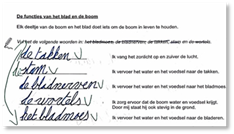
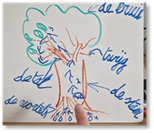
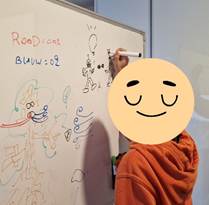
Over the past few weeks, I have accompanied several students who were given bundles of theory or mind maps full of words for the subject of World Orientation (WW). We went over the parts and the child drew out the meaning/understanding each time.
Below is an illustration of how we processed some parts of a 9-page bundle (student 3rd grade)
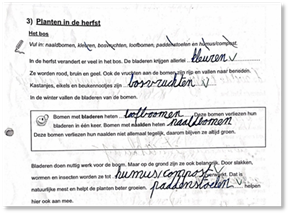
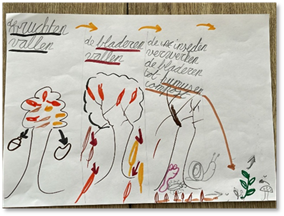

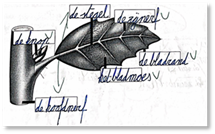
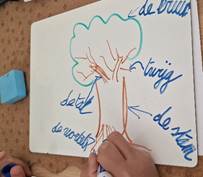
We integrate theory on existing drawings to create links between different parts of the learning.

🎯 Did you know that imagery can be taught?
As your child studies, he/she builds his/her own summary in a playful and active way. This grows the ability to translate theory into understanding - an essential learning strategy that strengthens autonomy and understanding.



 Nederlands
  English (UK)
  Français